
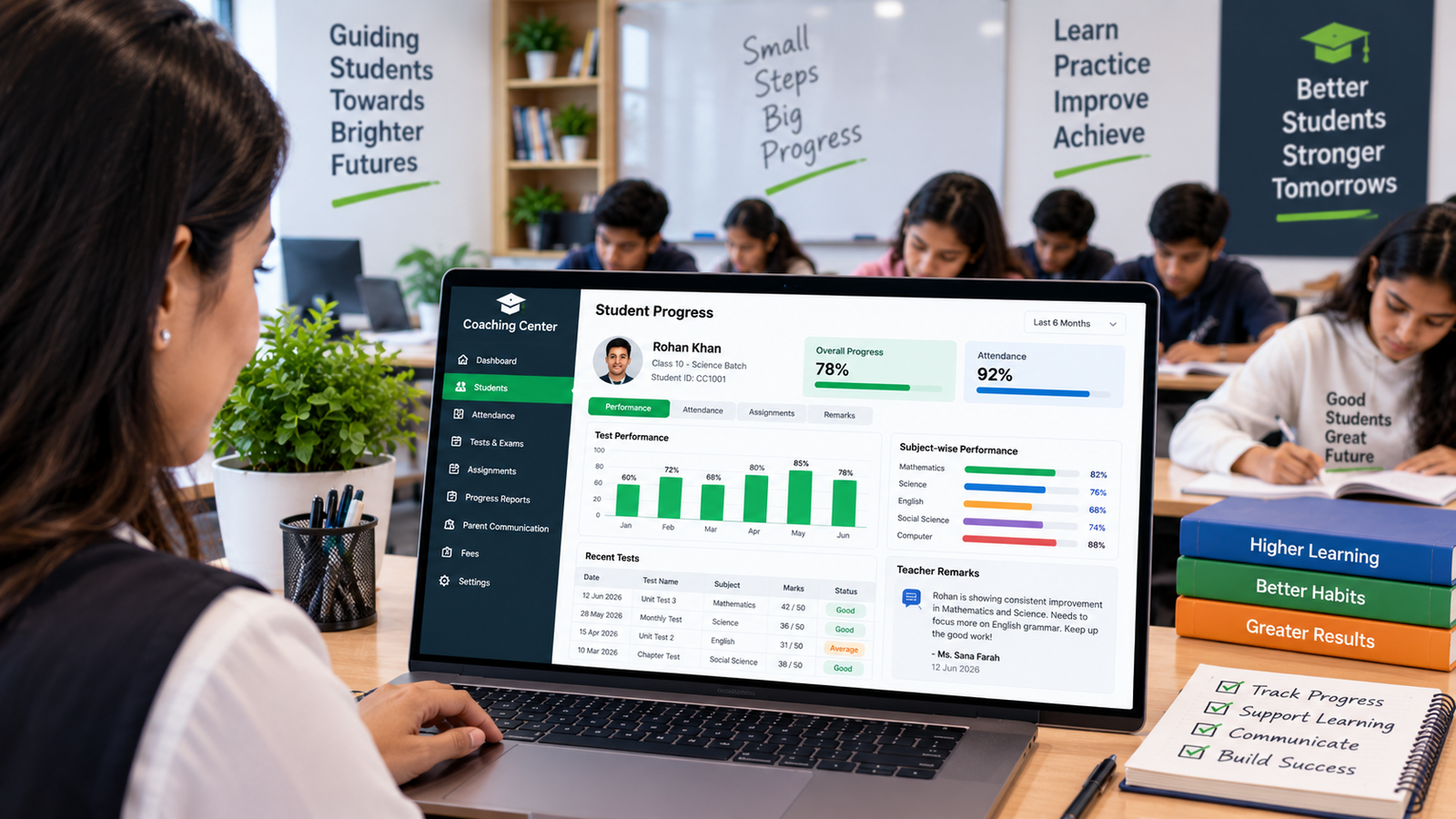
How to Track Student Progress in a Coaching Center
Tracking student progress is an important part of managing a coaching center. Teachers and institute owners need to understand how students are performing, where they may need additional support, and how their learning activities are progressing.
When student performance records are maintained manually across different notebooks or files, it can become difficult to review progress consistently.
A structured student progress tracking process can help coaching centers organize academic information, maintain communication with parents, and support better classroom planning.
In this guide, we will discuss practical ways to track student progress and manage academic records in a coaching center.
What Is Student Progress Tracking?
Student progress tracking is the process of recording and reviewing a student’s learning activities and academic development over time.
The information tracked depends on the coaching center’s courses, teaching methods, and assessment process.
It may include:
- Student name
- Course or subject
- Batch details
- Test marks
- Assignment performance
- Attendance information
- Learning goals
- Teacher observations
- Progress review dates
A progress tracking system should focus on relevant information that helps teachers understand student needs and plan appropriate support.
Why Is Student Progress Tracking Important?
Coaching centers work with students who may have different learning needs and academic goals. A consistent progress review process can help teachers organize their work.
1. Understand Student Performance
Regularly reviewing test results, assignments, and classroom participation can help teachers understand how students are progressing.
Different students may demonstrate learning in different ways, so progress should be evaluated using suitable methods.
2. Identify Areas That Need Support
Progress records may help teachers identify topics or skills where a student needs additional explanation or practice.
This can support more focused teaching and revision activities.
3. Maintain Organized Academic Records
A structured record helps teachers find previous assessment details and review a student’s progress over a selected period.
4. Improve Parent Communication
Accurate progress information can support meaningful discussions with parents or guardians.
Instead of sharing only general observations, teachers may discuss specific assessment results, learning goals, and areas for improvement.
5. Support Better Planning
Progress information can help teachers plan revision sessions, practice activities, and additional support according to student requirements.
Common Problems With Manual Student Progress Tracking
Many coaching centers maintain student performance records using notebooks, spreadsheets, or separate assessment sheets.
These methods may work for small groups but can become difficult to manage as the institute grows.
Records Stored in Different Places
Test marks, attendance, and teacher observations may be recorded separately, making it harder to review the complete picture.
Difficulty Comparing Progress
When assessment records are not organized consistently, teachers may spend additional time reviewing previous results.
Missing Assessment Details
Manual records may contain missing marks, incorrect dates, or incomplete student information.
Limited Parent Communication
Without organized progress records, it may be difficult to communicate specific and useful feedback to parents.
Time-Consuming Reports
Preparing student progress summaries manually can require additional administrative effort.
A consistent tracking process can help reduce these challenges.
How to Track Student Progress Step by Step
Step 1: Define Learning Goals
Start by identifying the learning objectives for each course or subject.
Goals may include:
- Understanding specific concepts
- Completing assignments
- Improving test performance
- Developing practical skills
- Preparing for examinations
Goals should be appropriate for the course and the student’s learning requirements.
Step 2: Maintain Student Records
Create an organized record for every enrolled student.
The record may include the student’s name, course, batch, admission details, and relevant academic information.
Only collect and maintain information that is necessary for the institute’s operations.
Step 3: Record Assessment Results
When students complete tests, assignments, or other assessments, record the relevant results.
Maintain consistent information such as:
- Assessment name
- Subject or topic
- Assessment date
- Marks or result
- Teacher remarks, if required
Use an assessment method that matches the course and learning objectives.
Step 4: Review Progress Regularly
Review student progress at suitable intervals.
The review schedule may depend on the course duration, assessment frequency, and teaching process.
Regular reviews can help teachers identify changes in performance and decide whether additional support is needed.
Step 5: Identify Learning Gaps
Use assessment results and teacher observations to identify topics that may require more attention.
A low score in one assessment does not necessarily describe a student’s overall ability. Consider relevant context and use multiple forms of feedback where appropriate.
Step 6: Record Teacher Feedback
Teachers may add concise observations about a student’s learning activities, completed assignments, or areas for practice.
Feedback should be factual, constructive, and useful for future learning activities.
Step 7: Communicate With Parents
When appropriate, share relevant progress information with parents or guardians.
Use clear language and focus on specific observations, achievements, and areas where additional support may help.
Different Methods of Student Progress Tracking
Coaching centers can use different methods based on their requirements and available resources.
1. Manual Progress Register
A paper register can be used to record test marks and teacher observations.
Advantages:
- Easy to start
- Requires no software setup
- Suitable for some small classes
Limitations:
- Difficult to search
- Records can be misplaced
- Reports require manual preparation
- Access control may be limited
2. Spreadsheet-Based Tracking
A spreadsheet can help teachers maintain student progress records digitally.
Advantages:
- Searchable information
- Customizable columns
- Basic calculations can be added
- Suitable for small teams
Limitations:
- Requires consistent data entry
- Multiple versions may cause confusion
- Access and privacy need to be managed
- Complex records can become difficult to maintain
3. Digital Coaching Management Software
A coaching management system may provide a centralized place for student and course information.
Depending on the platform, it may include student records, assessment information, attendance, reports, or communication features.
Before choosing software, verify whether the required student progress tracking features are available.
How to Improve Parent Communication
Parent communication is an important part of supporting student learning. A consistent communication process can help coaching centers share relevant information clearly.
Share Specific Information
Instead of using only general statements, discuss relevant details such as completed assessments, areas of improvement, and upcoming academic activities.
Communicate at Appropriate Intervals
Choose a communication schedule that fits the institute’s teaching process and the needs of students and parents.
Use Clear Language
Avoid unnecessary technical terms. Explain academic feedback in a way that is easy for parents to understand.
Protect Student Privacy
Share student information only with authorized individuals and use suitable communication channels.
Encourage Constructive Discussion
Progress discussions should focus on learning support, realistic goals, and practical next steps rather than only marks or rankings.
How Coaching Management Software Can Help
Coaching management software can help institutes organize student-related information in a centralized system.
Depending on the available features, a platform may support:
- Student records
- Course and batch management
- Attendance information
- Assessment records
- Student progress reports
- Parent communication records
- Fee and payment management
Not every platform provides all these features. Coaching center owners should confirm the available functionality before choosing a software solution.
A simple system that teachers can use consistently may be more practical than a complicated workflow.
Manage Coaching Center Records With MahinaBook
MahinaBook is designed to help businesses manage customers, plans, and recurring payment-related information through a simple management system.
For coaching centers, an organized workflow can help staff manage customer-related information and recurring payment activities.
MahinaBook’s coaching management solution can be explored through the Coaching Center Management Software page.
For detailed academic progress tracking, coaching institutes should confirm the available features and choose tools that support their teaching and assessment requirements.
Best Practices for Student Progress Management
Keep Records Updated
Record assessment results and relevant observations consistently to maintain accurate information.
Use Consistent Assessment Methods
Use suitable assessment methods and maintain consistent records to support meaningful progress reviews.
Review Progress Regularly
Choose a review schedule that matches the course structure and student learning needs.
Provide Constructive Feedback
Focus on specific observations and practical steps that can support student learning.
Protect Student Information
Restrict access to student records and use appropriate security measures.
Keep the Process Simple
Choose a progress tracking workflow that teachers can use without unnecessary administrative effort.
Conclusion
Student progress tracking helps coaching centers organize academic records, review learning activities, and communicate relevant information with students and parents.
By defining learning goals, recording assessment results, reviewing progress regularly, and maintaining clear feedback, coaching institutes can create a more structured academic management process.
A digital management system may help organize student information, depending on the features it provides.
Choose a student progress tracking method that is practical, consistent, and suitable for your coaching center’s teaching requirements.